Monday, 25 July 2016

Start small with geese farming

Ever thought you can make profit from geese farming?
Prince Arinze One-bunne, Chief Executive Officer, Jovanna Farms, Lagos, has been producing mini-livestock for more than five years. He encourages farmers to add mini-livestock to their integrated production system to meet increasing demand for food and nutritious meats.
One money spinner he has discovered is geese farming. This is because they are among the fastest-growing avian species commonly raised for meat.
Geese raising, he noted, can be incorporated into existing farming system to utilise farm waste products efficiently, hence providing small-scale farmers with a source of extra income and the much needed animal protein source for the family.
Describing geese farming as a trendy kind of “agribusiness”, Onebunne said intending farmers can start small with two males and three females while still holding down a full-time job elsewhere.
He said the birds have a large market with many end-products and uses.
Generally, the birds supply nutritious meat, huge eggs and rich fat for cooking, as well as feathers for bedding and clothing, which makes them particularly appropriate for providing farmers with a supplementary income. The meat is fatter than other poultry meats.
He said geese seem to be more resistant to diseases than other avian species.
Onebunne said he is making waves because of his will to innovate in the livestock industry by rearing different breeds. At Jovana Farms, breeding animals for therapy, such as geese, peacock, grasscutter and antelope is a wonderful way to explore this possibility, he added.
Geese are, however, the most rapid growing, having the longest commercial life. They are good foragers, reaching a marketable weight with little supplementary feeding and can practically raise themselves.
Onebunne said geese possess terrific eyesight, good memories, and raucous voices; attributes that make for excellent sentinels. “What most Nigerians don’t know is that geese are very cheap and easy to maintain and they provide animal protein as well as cash income. Your geese probably won’t make you affluent by laying about 60 eggs a year, but they can earn their keep through derived products that will surely bring in millions of naira.”
He advised young entrepreneurs to start with purebreds, crossbreds or rare breeds, which he sells at his Jovana Farms.
Onebunne said geese farming is a promising business for small farmers because they are very good layers.
Geese, he explained, are independent, larger than other poultry species and thus less vulnerable to predators.
When kept in small flocks and allowed to roam the farmyard or field, they are adept scavengers, requiring less attention than any other domestic bird. Geese adapt easily to captivity, and if small quantities of supplementary feed are provided in the evening they will even return home by themselves.
They can be raised on very small acreage, either as an independent operation or as an integrated piece with other farming ventures, such as a market garden or grazing ruminants. The size of operation, efficiencies, and time put into marketing are the primary things that will distinguish a successful commercial poultry.
For him, almost anyone can raise geese. In general, there is a very low overhead to get started (it can be done without buildings or large mechanical equipment.
Most successful farmers started small and grew their businesses.
Key issues are bedding, space, heat, access to water and feed and predator control. Feed may be purchased as ready-made ” starter” from the local farm store or mixed with a ration by local feed mill.
A clean set-up is the key to keeping them healthy. Feed generally contains corn, soymeal, sometimes oats or wheat, another protein source such as fish or crab meal, calcium and minerals.
Limiting factors for geese farming are that geese are not fully mature until they are two years.
Onebunne has a hatchery. He conducts farmer trainings. He also breeds other rarely bred birds such as ostriches, quails, ducks and guinea fowls.
His aim in rearing birds other than hens is to show their viability as alternative sources of meat and eggs.
When trained, he said, geese can serve as guards , protecting warehouses with their exceptional eyesight and wide field of vision. Combined with their strident voices, they make excellent guards against approaching strangers or predators since outsiders cannot calm them into silence.
According to him, chicken and turkey farmers keep geese to ward off poultry-eating predators.
If you really want to be a multi-billionaire, you cannot do it earning salaries. Dangote is not paid by anybody. Coscharis is not paid by anybody; they work for themselves. And in this clime there are so many persons that are working hard in spite of the situation we find ourselves. At JOVANA FARMS, we think that if we encourage the unemployed and farmers in activities that are very productive, those services that are required by even the oil companies, they will do much better. It is better to be in the agricultural sector because the potentials are here. The market is there too. So do not forget that the oil sector is employing few persons but the agricultural sector is going to provide a lot of opportunities and our strategies are pro-poor. So if you are talking of how many persons your intervention can pull at the same time; agriculture is just there for it.
In this fast paced world, people should get all the help they can in dealing with the sheer speed and harshness of everyday life. There have been a lot of ways discovered to cope with stress. Some watch movies all day during holiday; others listen to music, play and have fun with friends. While it may be true that all these are effective ways to cope with the everyday stress that we all are familiar to, there is still no denying the fact that activities involving nature remains the best practice. Breeding animals for therapy, such as geese, peacock, grasscutter and antelope is a wonderful way to explore this possibility.
Just like those who are passionate for gardening, people who have many years experience in keeping geese have always shared that the entire experience is a great therapy. From the moment they start laying eggs, up to the time the egg hatch, grow and become adults, there is something about geese that helps stressed out people to relax. So if you are among the millions of people who need a break from the world’s break neck speed, you should consider raising geese as your stress getaway.
 Geese are, however, the most rapid growing, have the longest commercial life and are the hardiest of all domesticated bird. They are good foragers, reaching a marketable weight with little supplementary feeding and can practically raise themselves. Geese adapt easily to different climates, its not surprising that these robust waterfowl were probably one of the first animals domesticated by man. In fact, geese are the popular bird during Christmas time in Europe. It’s only in Africa that the raising of geese have not been exploited commercially as much as chickens or turkeys.
Geese possess terrific eyesight, good memories, and raucous voices; attributes that makes for excellent sentinels. What most Nigerians don’t know is that geese are very cheap and easy to maintain and they provide animal protein as well as cash income. Your geese probably won’t make you affluent by laying about sixty eggs a year, but they can earn their keep by supplying the following farm products and services that will surely bring in millions of naira:
(1) INFERTILE EGGS: Huge, good for catering, scrambling and baking, try marketing extras to bakery and fast food restaurants.
(2) MEAT: Higher protein contents, succulent, richer, palatable, and more tender than turkey and chicken. Provide a rich food source for an often-hungry populace
(3) FEATHERS/DOWN: Valuable for comfy pillows and light, insulating comforters and for other upholstery uses
(4) WEEDING/GRASS TRIMMING: Once used to weed a variety of crops, geese are again becoming popular weeders as organic method catch on (they fertilize the soil, too).
(5) TOURISM: Geese are animal of unique feature and this makes the animal tradable for tourist uses. The big versatile rare-waterfowl have been valued highly-even considered indispensable.
(6) SECURITY GUARD: Geese make ideal “watchdogs”, they are unbridable guard animals.
(7) FERTILIZED EGGS/BREEDING STOCK: If you raise purebreds, crossbreds or rare breeds, you can usually get a pretty good price for them, depending on your area of the country. At JOVANA FARMS, we have prolific breeds available for sale at N100,000 for 2-males and 3-females of 10-months old point-of-lay.
(8) PEST CONTROL: Chicken and turkey farmers keep geese to ward off poultry-eating predators. Rural dwellers like the way they gobble down diseases-carrying ticks, cockroaches, grasshoppers, and small snakes.
Geese farming is a trendy kind of “agribusiness”, intending farmers can start out small with 2-males and 3-females while still holding down a full-time job elsewhere. In many ways geese farming is the perfect moonlighting business that can generate huge income. The geese farming industry is still an underestimated type of poultry in Nigeria. But it has a large sustainable market for its many products and uses.
Prince Arinze One-bunne, Chief Executive Officer, Jovanna Farms, Lagos, has been producing mini-livestock for more than five years. He encourages farmers to add mini-livestock to their integrated production system to meet increasing demand for food and nutritious meats.
One money spinner he has discovered is geese farming. This is because they are among the fastest-growing avian species commonly raised for meat.
Geese raising, he noted, can be incorporated into existing farming system to utilise farm waste products efficiently, hence providing small-scale farmers with a source of extra income and the much needed animal protein source for the family.
Describing geese farming as a trendy kind of “agribusiness”, Onebunne said intending farmers can start small with two males and three females while still holding down a full-time job elsewhere.
Generally, the birds supply nutritious meat, huge eggs and rich fat for cooking, as well as feathers for bedding and clothing, which makes them particularly appropriate for providing farmers with a supplementary income. The meat is fatter than other poultry meats.
He said geese seem to be more resistant to diseases than other avian species.
Onebunne said he is making waves because of his will to innovate in the livestock industry by rearing different breeds. At Jovana Farms, breeding animals for therapy, such as geese, peacock, grasscutter and antelope is a wonderful way to explore this possibility, he added.
Geese are, however, the most rapid growing, having the longest commercial life. They are good foragers, reaching a marketable weight with little supplementary feeding and can practically raise themselves.
Onebunne said geese possess terrific eyesight, good memories, and raucous voices; attributes that make for excellent sentinels. “What most Nigerians don’t know is that geese are very cheap and easy to maintain and they provide animal protein as well as cash income. Your geese probably won’t make you affluent by laying about 60 eggs a year, but they can earn their keep through derived products that will surely bring in millions of naira.”
He advised young entrepreneurs to start with purebreds, crossbreds or rare breeds, which he sells at his Jovana Farms.
Onebunne said geese farming is a promising business for small farmers because they are very good layers.
Geese, he explained, are independent, larger than other poultry species and thus less vulnerable to predators.
When kept in small flocks and allowed to roam the farmyard or field, they are adept scavengers, requiring less attention than any other domestic bird. Geese adapt easily to captivity, and if small quantities of supplementary feed are provided in the evening they will even return home by themselves.
They can be raised on very small acreage, either as an independent operation or as an integrated piece with other farming ventures, such as a market garden or grazing ruminants. The size of operation, efficiencies, and time put into marketing are the primary things that will distinguish a successful commercial poultry.
For him, almost anyone can raise geese. In general, there is a very low overhead to get started (it can be done without buildings or large mechanical equipment.
Most successful farmers started small and grew their businesses.
Key issues are bedding, space, heat, access to water and feed and predator control. Feed may be purchased as ready-made ” starter” from the local farm store or mixed with a ration by local feed mill.
A clean set-up is the key to keeping them healthy. Feed generally contains corn, soymeal, sometimes oats or wheat, another protein source such as fish or crab meal, calcium and minerals.
Limiting factors for geese farming are that geese are not fully mature until they are two years.
Onebunne has a hatchery. He conducts farmer trainings. He also breeds other rarely bred birds such as ostriches, quails, ducks and guinea fowls.
His aim in rearing birds other than hens is to show their viability as alternative sources of meat and eggs.
When trained, he said, geese can serve as guards , protecting warehouses with their exceptional eyesight and wide field of vision. Combined with their strident voices, they make excellent guards against approaching strangers or predators since outsiders cannot calm them into silence.
According to him, chicken and turkey farmers keep geese to ward off poultry-eating predators.
If you really want to be a multi-billionaire, you cannot do it earning salaries. Dangote is not paid by anybody. Coscharis is not paid by anybody; they work for themselves. And in this clime there are so many persons that are working hard in spite of the situation we find ourselves. At JOVANA FARMS, we think that if we encourage the unemployed and farmers in activities that are very productive, those services that are required by even the oil companies, they will do much better. It is better to be in the agricultural sector because the potentials are here. The market is there too. So do not forget that the oil sector is employing few persons but the agricultural sector is going to provide a lot of opportunities and our strategies are pro-poor. So if you are talking of how many persons your intervention can pull at the same time; agriculture is just there for it.
In this fast paced world, people should get all the help they can in dealing with the sheer speed and harshness of everyday life. There have been a lot of ways discovered to cope with stress. Some watch movies all day during holiday; others listen to music, play and have fun with friends. While it may be true that all these are effective ways to cope with the everyday stress that we all are familiar to, there is still no denying the fact that activities involving nature remains the best practice. Breeding animals for therapy, such as geese, peacock, grasscutter and antelope is a wonderful way to explore this possibility.
Just like those who are passionate for gardening, people who have many years experience in keeping geese have always shared that the entire experience is a great therapy. From the moment they start laying eggs, up to the time the egg hatch, grow and become adults, there is something about geese that helps stressed out people to relax. So if you are among the millions of people who need a break from the world’s break neck speed, you should consider raising geese as your stress getaway.

Geese farming
Geese possess terrific eyesight, good memories, and raucous voices; attributes that makes for excellent sentinels. What most Nigerians don’t know is that geese are very cheap and easy to maintain and they provide animal protein as well as cash income. Your geese probably won’t make you affluent by laying about sixty eggs a year, but they can earn their keep by supplying the following farm products and services that will surely bring in millions of naira:
(1) INFERTILE EGGS: Huge, good for catering, scrambling and baking, try marketing extras to bakery and fast food restaurants.
(2) MEAT: Higher protein contents, succulent, richer, palatable, and more tender than turkey and chicken. Provide a rich food source for an often-hungry populace
(3) FEATHERS/DOWN: Valuable for comfy pillows and light, insulating comforters and for other upholstery uses
(4) WEEDING/GRASS TRIMMING: Once used to weed a variety of crops, geese are again becoming popular weeders as organic method catch on (they fertilize the soil, too).
(5) TOURISM: Geese are animal of unique feature and this makes the animal tradable for tourist uses. The big versatile rare-waterfowl have been valued highly-even considered indispensable.
(6) SECURITY GUARD: Geese make ideal “watchdogs”, they are unbridable guard animals.
(7) FERTILIZED EGGS/BREEDING STOCK: If you raise purebreds, crossbreds or rare breeds, you can usually get a pretty good price for them, depending on your area of the country. At JOVANA FARMS, we have prolific breeds available for sale at N100,000 for 2-males and 3-females of 10-months old point-of-lay.
(8) PEST CONTROL: Chicken and turkey farmers keep geese to ward off poultry-eating predators. Rural dwellers like the way they gobble down diseases-carrying ticks, cockroaches, grasshoppers, and small snakes.
Geese farming is a trendy kind of “agribusiness”, intending farmers can start out small with 2-males and 3-females while still holding down a full-time job elsewhere. In many ways geese farming is the perfect moonlighting business that can generate huge income. The geese farming industry is still an underestimated type of poultry in Nigeria. But it has a large sustainable market for its many products and uses.
Friday, 15 July 2016
Snail Farming – How to farm these slow creatures for fast profits in Africa

Snail farming in Africa is one of the top interesting business opportunities on the continent.
West Africa is home to the largest species of land snail in the world. The Giant African land snail (Achatina species), is known to grow up to 30cm in length and can be found in the dense tropical rain forests across the region from Guinea, Liberia, Sierra Leone, Ivory Coast, Ghana to Nigeria.
For hundreds of years, Africa’s appetite for snails has been served through traditional means. Snails handpicked from the bush (usually in the dead of the night) have been the only way to get snails to the market and dinner table.
However, as Africa’s population explodes and our forests continue to be sacrificed to build cities, the (bush) supply of snails cannot keep up with the soaring demand.
This has created an opportunity in the market for snail breeders and farmers who now cultivate these interesting creatures on small farms and in their backyards for impressive profits.
Let’s find out how fast these slow animals can bring in cash….
First, the impressive success story of an African snail farmer…
Snail farming is a niche and unusual business and successful snail farmers like Nigeria’s Ismail Abdulazeez are enjoying the huge rewards of this lucrative but little known venture.
In his interview with CNN (see video below), Ismail, who cultivates snails in large cages in his backyard, shares his experience breeding snails for profit.
His prized products end up in some of the kitchens of high-end hotels in Lagos where they are creatively used to prepare tasty African dishes.
Snails are a great delicacy, and for good reason too…
Snails are a huge part of the diet in many parts of Africa, although they are not always affordable and available all year round. Their high protein, low fat and cholesterol content make them a nutritional favourite.
Snails contain almost all the amino acids needed by the body and most of its by-products are used for cosmetics and medicines.
As our population becomes more interested in healthier living and low-cholesterol diets, snails will become a popular alternative to to all the fatty and non-healthy meats that flood our markets nowadays. They are much cheaper than red meat with greater health benefits on top!
Snails have, for a long time, been a popular and recurring item on the menus of hotels, restaurants and bars where they often feature as boiled, fried and spiced kebabs. They are also a great addition to soups and stews which are a significant part of most African dishes.

Tasty African delicacies featuring the Giant African snail (photo credits: afrolems.com; mamadish.com)
Market Opportunities for Snail Farming in Africa
Most of the snails supplied to the African market are gathered from bushes and forests during the rainy season (usually between April and September).
Because snails are very dormant during the dry season, they become increasingly scarce during this period and the market is starved of adequate supply until the next wet season. This makes the supply of snails very seasonal in many parts of Africa where they serve as food.
As a consequence, snails can fetch much higher prices during the dry season (December to March) when supply often does not keep up with demand.
Snails may go on break during the dry seasons but the human appetite for its taste always remains, and continues to grow throughout the year. And to think that several festivities take place during the dry season (Christmas et al), makes this a first choice agribusiness.
Due to steadily growing demand from customers, hotels and restaurants are always in need of snail delicacies on their menus. And given the significant upside to the profits that can be made, it makes a lot of sense to take maximum advantage of this market when the supply of snails is significantly short.
There is also growing demand in Europe for giant African snails. Apart from their great taste, many people abroad like to keep them as pets and keepsakes due to their sheer size (I was surprised too!). But never mind, you are likely to be very busy satisfying the local demand to bother about exports.
However, it’s still good to know that such foreign market opportunities exist for this small business. If you’re interested in exports, you could read up the

Giant African snails are a popular sight on Africa’s interstate and transnational highways (photo credit: Frans Lanting)
Success tips for aspiring Snail farming in Africa
As a Smallstarter, your primary goal should be to take advantage of the seasonality of this market in order to gain premium prices for your snails. Target the high-end customers (hotels, restaurants and households) who can afford to pay a premium for a steady supply of the product.
If you supply all year round, you are likely to earn lesser during the rainy seasons (when supply is in abundance) and more in the dry seasons (when the product is scarce).
You could buy cheaply from the villages and other remote areas while the supply is up during the rainy season and maintain a healthy stock of large snails that you can unleash on your customers when supply falls in the dry season.
 But to achieve this, there is a very important condition. The size of your snails must be large and ‘intimidating’ enough to command a premium (high) price.
For this to happen, you must start your snail farm with the right species (the Giant African type) and ensure that you apply proper breeding, stocking and feeding practices to achieve the huge sizes that will make you a highly sought after supplier.
If your snails are bred well, they should start to reach market size from six to twelve months, although some farmers like to leave theirs for much longer. (photo credit: msn.com)
Presently, more than 90 percent of the snails supplied to our local markets are picked from the forests. While this has been the traditional supply source, our growing population and rising rural to urban migration rates make it unsustainable.
An artificial intervention like snail farming is the only way to satisfy the growing demand. And as long as a huge chunk of the market depends on snails captured in the wild, nobody can assure a steady and consistent supply of large snails like a farmer who breeds snails in his/her backyard!
Some things you should consider before you start a snail farm…
 In terms of cost and time, snail farming is a low risk business. Unlike many other livestock businesses, snail farming requires very little startup and operating costs.
It can be run from your backyard (if you have a sizeable one) or on that piece of land wasting away in your neighbourhood or village.
Snails are friendly to the environment and their droppings are not offensive (unlike pigs and poultry) so there’s no chance an angry neighbor will come knocking.
Snails also multiply really fast laying up to 100 eggs in one go. Because snails are hermaphrodites (have both male and female sexual organs), they get to mate easily throughout the year. This high reproduction rate has made snails a pest in many regions of the world.
However, it’s this fast reproductive ability that makes these slow creatures a delight to an entrepreneur. Snails can give very high returns on your initial investment if you do your homework well and target niche and repeat customers. (photo credit: scientificamerican.com)
Thursday, 23 June 2016
Grasscutter Farming in Nigeria
GRASSCUTTER FARMING IN NIGERIA :
There are many decent ways to make good money farming small garden plots or backyard and a lot of people are using these methods to earn part-time or full-time incomes. Rearing Grasscutters in Nigeria in this type of space is one of the best way to earn cool money in MILLIONS.
Grasscutters (a rodent family), like many rodent species have been and continue to be a delicacy in a number of countries, in Latin America, Africa and Asia where markets exist for a wide variety of rodent species for consumption, grasscutters are often preferred over other sources of meat. The vast majority of these animals are still gathered from the wild and several species have been hunted so extensively that they are now extinct. And this offers small-scale farmers, investors, businessmen and all those with wealth-mind set, an economic incentive for raising grasscutters in captivity.
Grasscutters are widely distributed and valued in West and Central Africa. The meat is of a higher protein but lower fat content than domesticated farm meat and it is also appreciated for its tenderness and taste. More recently, intensive production of grasscutters has been undertaken in many African countries, including Nigeria.
Research carried out over the last two decades has allowed the selection and improvement of stock for captivity with much knowledge and techniques for grasscutter production.
Practical information is readily available for anyone interested in grasscutter farming/production in Nigeria.
Grasscutter has been overhunted and savanna habit is often at risk during the dry season from bushfires, which are lit during bushmeat hunting expeditions. Grasscutters are not the most prolific of rodent species but the high demand, attract market price and small amount of investment required makes grasscutters a suitable mini-livestock activity for income generation in many part of Nigeria.
There are few Nigerians today that are making brisk business in grasscutter rearing. Grasscutter farming in Nigeria if pursed with the benefit of the right information and knowledge now available, is a very viable commercial venture. Grasscutters are mainly herbivorous; require neither imported component of food nor expensive medical expenses if strict hygiene is maintained. They are easy and very cheap to raise. Gestation period of the grasscutter is about 154 days or five month.
Grasscutter meat is a delicacy in Nigeria today and are served in big hotels and restaurants as well as some joints patronized by middle to high level people.
Depending on your experience, grasscutter can be packaged to outfits as pepper soup meat, suya, frozen or dried meat. Most Chinese are looking for the meat as regular meal and also to entertain most of their guests from abroad.
If you rear grasscutter in commercial quantity under good hygienic condition, fast food restaurants such as Mr. Biggs, Tantalizers, Sweet Sensation etc will be your regular customers. They will only need your assurance of regular supply per week. There is also good market for grasscutter meat in the international market if only you can do a good packaging.
Nigeria`s economic recovery programmes have necessitated a radical shift from total dependence on government for job to self employment. One such attractive area for self employment is Grasscutter farming. It is a great money-spinning business that can provide a substantial source of protein to complement Nigerian carbohydrate meals. Sadly Nigerians inclination to go into business in the field where thousand have already made their fortune has led to the ulter neglect of such lucrative area as Grasscutter farming in Nigeria.
Many who are also into the business of Grasscutter farming are unwilling to let others know about the farming methodology. The techniques are after shrouded in secrecy.
HERE ARE THE DETAILED ADVANTAGES OF GRASSCUTTER FARMING:
1. They can easily be reared at home
2. They command a very good selling price as a family that is made up of five grasscutters is sold for N45,000 or more. A serious and dedicated farmer can have close to 200 families at a time.
3. They are herbivorous animals, so they feed mostly on grass.
4. Grasscutters are polygamous in nature, hence it makes it easy to colony raise them in captivity and in large numbers.
5. It is a multimillionaire business, if one can take the courage of breeding them on commercial scale.
6. It is a business venture that can be started on small scale with a space of less than one room.
7. Source of income and employment: one can depend on grasscutter rearing for his livelihood. In fact, grasscutter farming should create a job opportunities for urban and rural dwellers. The business of producing, processing, transporting, storing, financing and servicing grasscutter products should give employment to many people.
8. Grasscutter farming in Nigeria is a virgin in the kingdom of livestock as a result earlier investors without doubt have bright prospects in exploring this venture.
9. You can conveniently earn income a thousand fold higher than your present earning. You can keep your present job and do this on part time.
10. The demand for grasscutter meat is so large that it is not being met.
11. Production of pharmaceuticals: The pancreas of the grasscutter is believed to have a high concentration of insulin, which is used in local preparation for the treatment of diabetes. The possibility of using the brains, blood and various organs for producing various biological products for use in medicine and research generally could be explored.
12. The meat has high carcass quality and protein is comparable to that of poultry.
13. The meat tastes well and highly relished.
14. There is no known religion discrimination against grasscutter meat.
15. Grasscutters do not compete with man for food.
16. As pets: people usually derived pleasure and satisfaction from raising grasscutters etc.
There are many decent ways to make good money farming small garden plots or backyard and a lot of people are using these methods to earn part-time or full-time incomes. Rearing Grasscutters in Nigeria in this type of space is one of the best way to earn cool money in MILLIONS.
Grasscutters (a rodent family), like many rodent species have been and continue to be a delicacy in a number of countries, in Latin America, Africa and Asia where markets exist for a wide variety of rodent species for consumption, grasscutters are often preferred over other sources of meat. The vast majority of these animals are still gathered from the wild and several species have been hunted so extensively that they are now extinct. And this offers small-scale farmers, investors, businessmen and all those with wealth-mind set, an economic incentive for raising grasscutters in captivity.
Grasscutters are widely distributed and valued in West and Central Africa. The meat is of a higher protein but lower fat content than domesticated farm meat and it is also appreciated for its tenderness and taste. More recently, intensive production of grasscutters has been undertaken in many African countries, including Nigeria.
Research carried out over the last two decades has allowed the selection and improvement of stock for captivity with much knowledge and techniques for grasscutter production.
Practical information is readily available for anyone interested in grasscutter farming/production in Nigeria.
Grasscutter has been overhunted and savanna habit is often at risk during the dry season from bushfires, which are lit during bushmeat hunting expeditions. Grasscutters are not the most prolific of rodent species but the high demand, attract market price and small amount of investment required makes grasscutters a suitable mini-livestock activity for income generation in many part of Nigeria.
There are few Nigerians today that are making brisk business in grasscutter rearing. Grasscutter farming in Nigeria if pursed with the benefit of the right information and knowledge now available, is a very viable commercial venture. Grasscutters are mainly herbivorous; require neither imported component of food nor expensive medical expenses if strict hygiene is maintained. They are easy and very cheap to raise. Gestation period of the grasscutter is about 154 days or five month.
Grasscutter meat is a delicacy in Nigeria today and are served in big hotels and restaurants as well as some joints patronized by middle to high level people.
Depending on your experience, grasscutter can be packaged to outfits as pepper soup meat, suya, frozen or dried meat. Most Chinese are looking for the meat as regular meal and also to entertain most of their guests from abroad.
If you rear grasscutter in commercial quantity under good hygienic condition, fast food restaurants such as Mr. Biggs, Tantalizers, Sweet Sensation etc will be your regular customers. They will only need your assurance of regular supply per week. There is also good market for grasscutter meat in the international market if only you can do a good packaging.
Nigeria`s economic recovery programmes have necessitated a radical shift from total dependence on government for job to self employment. One such attractive area for self employment is Grasscutter farming. It is a great money-spinning business that can provide a substantial source of protein to complement Nigerian carbohydrate meals. Sadly Nigerians inclination to go into business in the field where thousand have already made their fortune has led to the ulter neglect of such lucrative area as Grasscutter farming in Nigeria.
Many who are also into the business of Grasscutter farming are unwilling to let others know about the farming methodology. The techniques are after shrouded in secrecy.
HERE ARE THE DETAILED ADVANTAGES OF GRASSCUTTER FARMING:
1. They can easily be reared at home
2. They command a very good selling price as a family that is made up of five grasscutters is sold for N45,000 or more. A serious and dedicated farmer can have close to 200 families at a time.
3. They are herbivorous animals, so they feed mostly on grass.
4. Grasscutters are polygamous in nature, hence it makes it easy to colony raise them in captivity and in large numbers.
5. It is a multimillionaire business, if one can take the courage of breeding them on commercial scale.
6. It is a business venture that can be started on small scale with a space of less than one room.
7. Source of income and employment: one can depend on grasscutter rearing for his livelihood. In fact, grasscutter farming should create a job opportunities for urban and rural dwellers. The business of producing, processing, transporting, storing, financing and servicing grasscutter products should give employment to many people.
8. Grasscutter farming in Nigeria is a virgin in the kingdom of livestock as a result earlier investors without doubt have bright prospects in exploring this venture.
9. You can conveniently earn income a thousand fold higher than your present earning. You can keep your present job and do this on part time.
10. The demand for grasscutter meat is so large that it is not being met.
11. Production of pharmaceuticals: The pancreas of the grasscutter is believed to have a high concentration of insulin, which is used in local preparation for the treatment of diabetes. The possibility of using the brains, blood and various organs for producing various biological products for use in medicine and research generally could be explored.
12. The meat has high carcass quality and protein is comparable to that of poultry.
13. The meat tastes well and highly relished.
14. There is no known religion discrimination against grasscutter meat.
15. Grasscutters do not compete with man for food.
16. As pets: people usually derived pleasure and satisfaction from raising grasscutters etc.
Wednesday, 18 May 2016
How To Grow Edible Mushroom In Commercial Quantity
Some Species For Mushroom Farming
Mushroom farming is one of the farming that holds high prospect but has never gained ground in Nigeria so far. Whether you decide to grow your mushrooms in your garden (for private consumption) or in a big farm (for commercial use), it is important that you know some important steps to take when growing mushroom.
Few that are into mushroom farming are making serious money and the process of starting mushroom farm is quite simple. Another good thing about mushroom farming is that it is not capital intensive and the demand for edible mushrooms is quite high in the market. You can be making as high as two million every 3 months if you take up mushroom farming now in commercial quantity.
A mushroom is a kind of fungi that grows on the soil or on the body of its food, usually decaying tree trunks. It is the fleshy part of the fruiting body of a fungus. Aside from the delicious taste of edible mushrooms, it also has numerous health benefits. The button mushroom can help in reducing weight, shiitakes are known to fight tumors, the chanterelle contains a reasonable amount of vitamins, while the oyster is currently being studied as a possible cure to HIV. All these are the health benefits of mushrooms and many more.
Before we discuss the various steps involved in growing your own mushrooms, here are a few facts about mushrooms you should know.
Saprotrophic: These are the types of mushrooms that grow on decaying wood, plants and animals. Saprotrophs contain acids and enzymes that help to decompose or break down dead or decaying tissues for their absorption.
Examples of such type of mushrooms are Oysters, Shiitakes, Morels e.t.c
Mycorrhizal: This category of mushrooms are difficult to cultivate because of their nature. Mycorrhizal mushrooms have a kind of symbiotic relationship with the trees and plants they grow on. That is, the mushroom and its host derive mutual benefit from each other. This is so because, the mushroom weaves its mycelia into the root of the tree or plant, and by so doing, contributes extra moisture and nutrients to the tree, while getting sugars such as glucose from the plant in return.
Examples of Mycorrhizal mushrooms are Chanterelles, Porcini and so on.
Endophytic: What distinguishes the Endophytic mushroom from the Mycorrhizal is the fact that it is easier to cultivate. It can be grown in the absence of its host. The endophytic mushroom partners with its host, providing it with nutrients and resistance to pathogens.
Parasitic: The parasitic mushroom’s relationship with its host is one-sided. In that, the host suffers from infections of the mushroom until it dies.
The Honey fungus, Caterpillar and Lion’s mane are all good examples of parasitic mushrooms.
In growing your mushrooms, you must chose some of the best species according to the market demand and your environment. Here we present to you some of the most desirable edible mushrooms you can start your mushroom farming with.
Some varieties of edible mushrooms that you can choose from are listed below.
If you are growing your mushrooms on saw dust, you must do the following:
Step 1: Ensure that the sawdust or straw is free from micro-organisms or anything that may disturb the growth of the mushrooms.
Step 2: Spread your medium into a container that can provide enough room for proper growth of the mushrooms.
Step 3: Mix the mushroom spawn with the medium inside the container.
Step 4: The mushroom spawn needs a certain amount of heat to enable its roots settle in the medium. Therefore, you must heat the container with the mushroom spawn and the medium or place it in direct sunlight for a while.
Step 5: After heating the medium and the spawn, the next thing to do is to put the mixture in a dark room. It could be a cabinet or drawer, but it must be a darkened environment where the temperature is not too high.
Step 6: When you have done all that you need to do, you must leave the mixture in the drawer or cabinet for about three to four weeks for it to grow. Meanwhile, cover the mixture with soil and continue to spray with water to keep it damp even as the mushrooms grow.
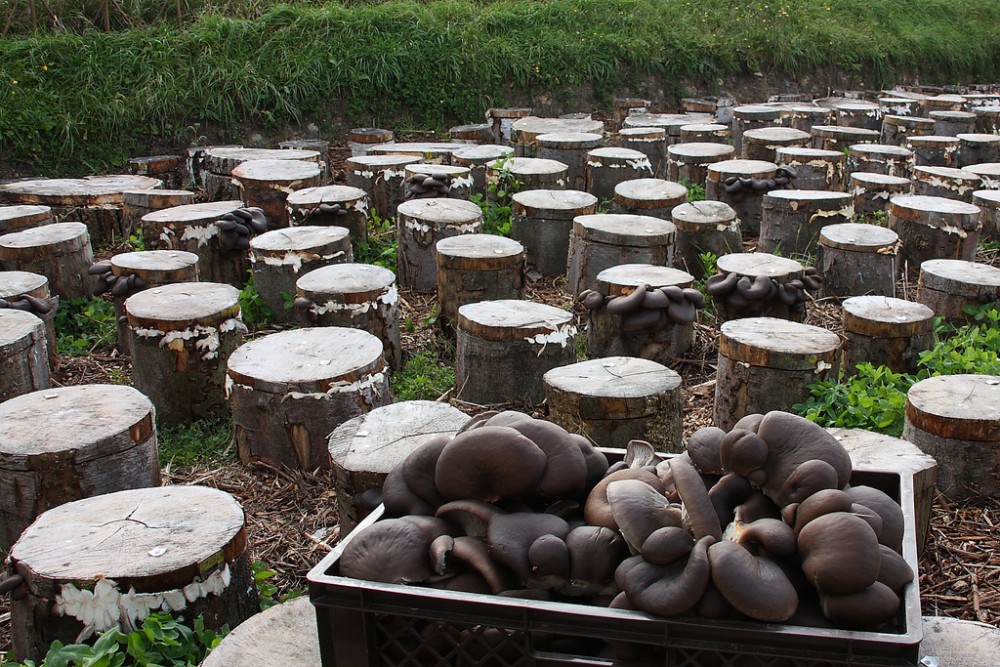
But in the case of a log, you must make sure the wood is safe for the growth of your mushrooms, cut holes into the wood and then introduce the mushroom spawn into the holes in the log wood. After which, you will have to put the log under a shade, with continuous spraying of water until the mushrooms start to develop.
Whatever medium you decide to use in cultivating your mushrooms, you must make sure you put all the measures that I have discussed in place and you can be sure to have a bountiful harvest of mushrooms at the end of the day.
Few that are into mushroom farming are making serious money and the process of starting mushroom farm is quite simple. Another good thing about mushroom farming is that it is not capital intensive and the demand for edible mushrooms is quite high in the market. You can be making as high as two million every 3 months if you take up mushroom farming now in commercial quantity.
A mushroom is a kind of fungi that grows on the soil or on the body of its food, usually decaying tree trunks. It is the fleshy part of the fruiting body of a fungus. Aside from the delicious taste of edible mushrooms, it also has numerous health benefits. The button mushroom can help in reducing weight, shiitakes are known to fight tumors, the chanterelle contains a reasonable amount of vitamins, while the oyster is currently being studied as a possible cure to HIV. All these are the health benefits of mushrooms and many more.
Before we discuss the various steps involved in growing your own mushrooms, here are a few facts about mushrooms you should know.
- Mushrooms mostly grow in moist or damp places. In other words, it needs water to grow.
- It must be grown where there is shade to protect it from wind and sun.
- It also needs oxygen for survival.
- Not all mushrooms are good for consumption. Some species of mushrooms are toxic, some are poisonous, while some are edible.
Saprotrophic: These are the types of mushrooms that grow on decaying wood, plants and animals. Saprotrophs contain acids and enzymes that help to decompose or break down dead or decaying tissues for their absorption.
Examples of such type of mushrooms are Oysters, Shiitakes, Morels e.t.c
Mycorrhizal: This category of mushrooms are difficult to cultivate because of their nature. Mycorrhizal mushrooms have a kind of symbiotic relationship with the trees and plants they grow on. That is, the mushroom and its host derive mutual benefit from each other. This is so because, the mushroom weaves its mycelia into the root of the tree or plant, and by so doing, contributes extra moisture and nutrients to the tree, while getting sugars such as glucose from the plant in return.
Examples of Mycorrhizal mushrooms are Chanterelles, Porcini and so on.
Endophytic: What distinguishes the Endophytic mushroom from the Mycorrhizal is the fact that it is easier to cultivate. It can be grown in the absence of its host. The endophytic mushroom partners with its host, providing it with nutrients and resistance to pathogens.
Parasitic: The parasitic mushroom’s relationship with its host is one-sided. In that, the host suffers from infections of the mushroom until it dies.
The Honey fungus, Caterpillar and Lion’s mane are all good examples of parasitic mushrooms.
In growing your mushrooms, you must chose some of the best species according to the market demand and your environment. Here we present to you some of the most desirable edible mushrooms you can start your mushroom farming with.
Choose Edible Species For Mushroom Farming
Like I said earlier, not all mushrooms are edible. So, the first step in growing your own mushrooms, is to identify the species that are good for consumption.Some varieties of edible mushrooms that you can choose from are listed below.
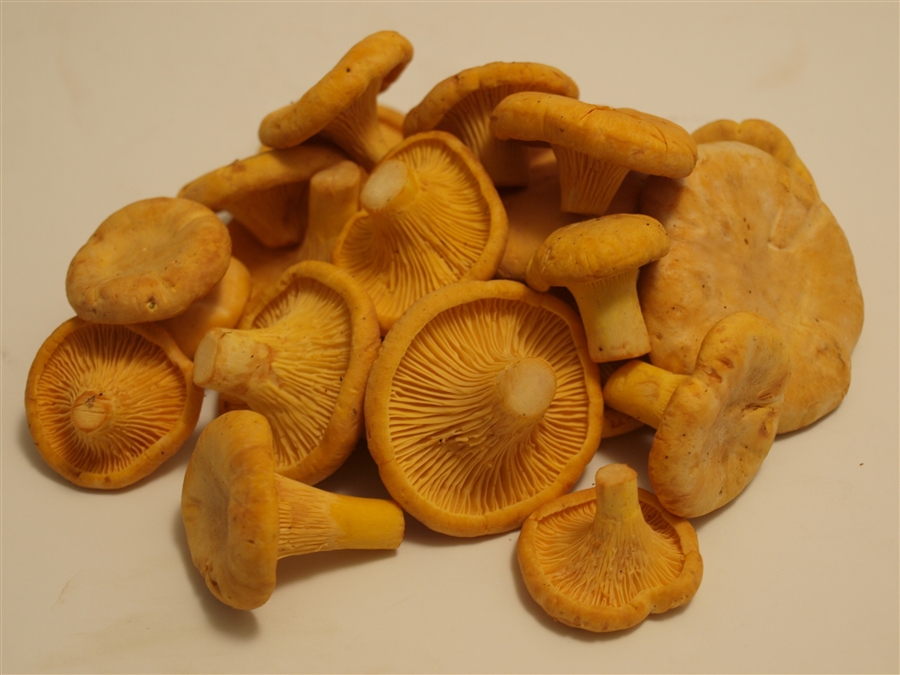
Chanterelles (Cantharellus Cibarius)
Chanterelles (Cantharellus Cibarius)
Rich in vitamin C, D and containing a high amount of potassium, the chanterelle is commonly grown in Asia, North America and the northern parts of Europe.
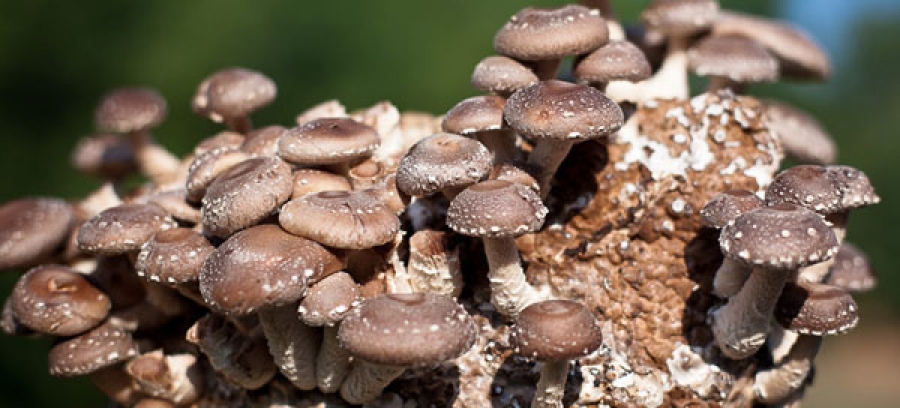
Shiitake (Letinula Edodes)
Shiitake (Letinula Edodes)
The shiitake is a variety of mushroom mostly grown in Asian countries, especially in Japan where its name originated from. It has been known to reduce tumors.
Morels (Morchella Esculenta)
Morels is composed of vitamin C and antioxidants, it protects the body from toxic materials and also protects the liver.
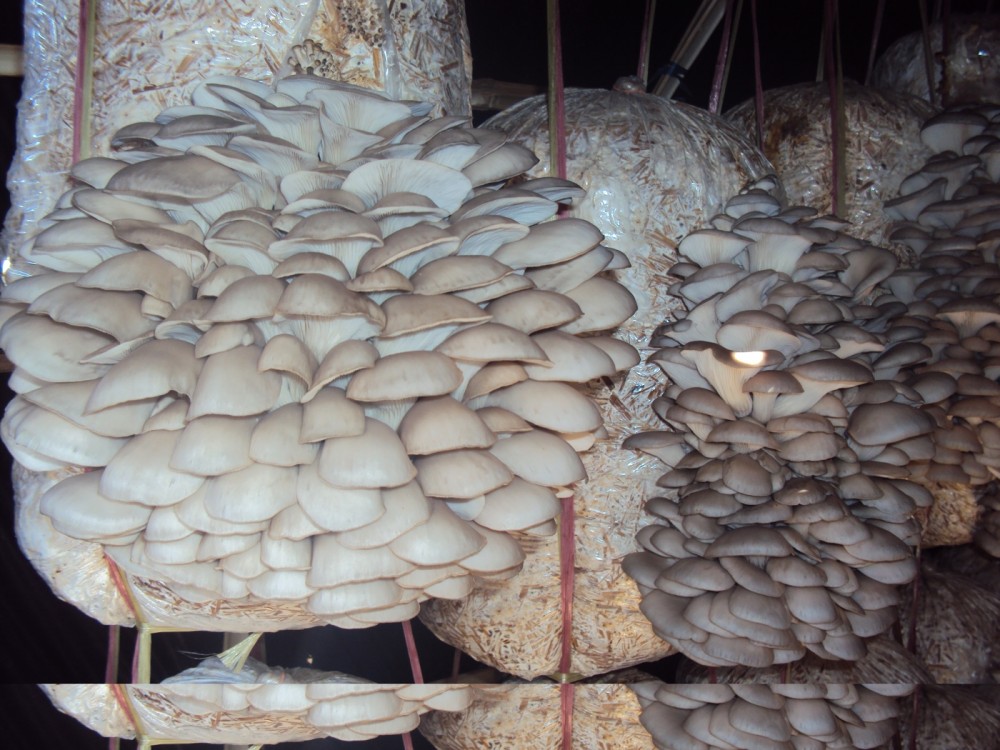
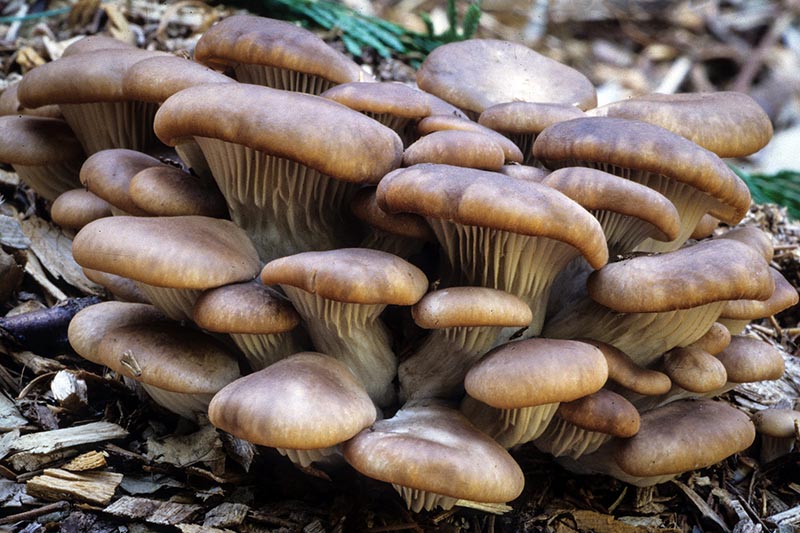
Oysters (Pleurotus Ostreatus)
Oysters (Pleurotus Ostreatus)
Oysters are known to have anti-oxidant and anti-bacterial effects. It can also help in reducing the level of cholesterol in the body.
After you have chosen the species you want to grow, you can then go ahead to purchase its spawn. The spawn of the particular variety of mushroom you wish to grow is the material that carries the mycelium of the strain of the mushroom pending when it will be cultivated. It could be sawdust, grain or any substance that can hold the strain of mushroom until it is ready to be cultivated.
Decide On The Medium To Grow Your Mushroom
There are two mediums that you can use in growing your mushroom. You can grow your mushroom on sawdust or straw, or you can cultivate it on a log wood.If you are growing your mushrooms on saw dust, you must do the following:
Step 1: Ensure that the sawdust or straw is free from micro-organisms or anything that may disturb the growth of the mushrooms.
Step 2: Spread your medium into a container that can provide enough room for proper growth of the mushrooms.
Step 3: Mix the mushroom spawn with the medium inside the container.
Step 4: The mushroom spawn needs a certain amount of heat to enable its roots settle in the medium. Therefore, you must heat the container with the mushroom spawn and the medium or place it in direct sunlight for a while.
Step 5: After heating the medium and the spawn, the next thing to do is to put the mixture in a dark room. It could be a cabinet or drawer, but it must be a darkened environment where the temperature is not too high.
Step 6: When you have done all that you need to do, you must leave the mixture in the drawer or cabinet for about three to four weeks for it to grow. Meanwhile, cover the mixture with soil and continue to spray with water to keep it damp even as the mushrooms grow.
This Mushroom Farm is a good example of commercial open mushroom farming
But in the case of a log, you must make sure the wood is safe for the growth of your mushrooms, cut holes into the wood and then introduce the mushroom spawn into the holes in the log wood. After which, you will have to put the log under a shade, with continuous spraying of water until the mushrooms start to develop.
Whatever medium you decide to use in cultivating your mushrooms, you must make sure you put all the measures that I have discussed in place and you can be sure to have a bountiful harvest of mushrooms at the end of the day.
Tuesday, 17 May 2016
How To Start Animal Feeds Production Business
Animal feeds production. Sometimes when I look at the scope of things with regards to business opportunities in Nigeria, I’m often moved to thank God for the country.
So many business guidelines has been provided on this platform free of charge as a way of encouraging everyone to see the ones they could individually do and keep poverty at bay and good enough, thousands of Nigerian entrepreneurs are not sleeping over it as many start ups are springing up almost on daily basis with complete knowledge to go into any type of business of choice.
Undauntedly and in our continual efforts in having various lucrative business ideas provided for you, we are here again drawing your attentions to another cool business that could be done from home while quietly but continually smiling to the banks and living the life of your choice.
I know by now, that it’s no longer a new thing hearing that both big and small scale livestock farmers in Nigeria are making it so big that some of them are presently said to be competing with oil dealers in terms of money and in an enviable lifestyles.
Another big but new thing happening now is that, animal feed productions has suddenly become child of necessity as the result of having so many thriving livestock farms in Nigeria with huge amount of money exchanging hands on regular basis. Yes, in case you don’t know or haven’t paid enough attentions towards that angle, Animal feed production is the next big thing in the country.
 People are bagging money right from their homes producing bags of livestock feeds day in day out! Are you interested in this business? Hold your breathe as we take you through the basics on how to start this money making business right from any place of your choice and in any scale that you can afford.
Livestock farmers both big and small scale, all have one thing in mind and that is providing their teeming customers with healthy and fat animals which in turn yields the needed profits to them and you are in millions if you can key into this position by giving them what would help them to achieve that objective.
For instance, if a single catfish could weigh up to a kilogram and half instead of having 2 or 3 to achieve that, the farmer stands to make much gain as you can see and that solely depends on good feed made with right ingredients.
Livestock farming in Nigeria is attracting much investors which gives rise to feed production boom, and one top secret to feed production business is that, it enjoys low competition because people are concentrating more in farming because of what they are making from that alone.
So we are of the opinion that this sector is worthy to be looked into and more so, as it could be started on a very low scale with limited fund and be grown from there.
Even if you don’t have money to start it right away, you can leverage from those that have the equipment and grow your customer base and make enough money to procure your own equipment for full time production in shortest time possible.
What you need to start are these:
Getting the right formula, which is the ingredients to put and the ratio to be used. This is what usually give producers an edge over others. So as a new entrant with lean purse, do some research and come up with a unique formula and look for feed producers with the needed equipment to rent from to produce your own brand.
Embark on aggressive marketing by giving sample feeding to farmers, do that over and over and within a short time, you are sure to have your own machine for maximum productions.
With the right knowledge of where you want to specialize in, spend some time to learn about the nutritional needs. For eg, the combination for chicken feeds is different from that of catfish, likewise those of other livestock. This is where you need the assistance of an animal nutritionist to help you come up with the right formula.
2. Ingredients:
You need to purchase the following ingredients for production. Maize, Corn, Cassava grits for energy, Wheat offal as a source of protein, Noodle wastes for carbohydrate and Proteins, Soybean meal, Fish meals Palm kernel cake, Oyster shells, Bone meals, Minerals and common Salt.
3.Equipment:
These are the equipment you would need to start a full production on your own. Grinders, wet and dry, Mixers Wet/dry, Pellets, cooker, freezer, crumblier, Elevators, Conveyors, Sifter, Weighing scales, Steam boiler, Sealers and Bag sewers and Packaging bag. If you find this hard to come by, no problem, some effective custom made are readily available to choose from for your business and its size.
4.Packaging:
This is so important because the size of your feeds either hold or scare your customers away. Give them various sizes to choose from and make sure to stick with what you are known for.
5 Marketing:
This is an area that every aspiring feed producers fear most and they are right because they can only make money by having their products sold repeatedly.
The only solution to this, is to market, market and market! Have enough samples with you any time you are out there and always leave your means of contacts with your prospective customers.
Get sales representatives and give them enough incentive to keep them motivated to be up and doing.
Warning: Do not put them on a fixed salary. Let their earning be based on commissions because they would be encouraged to work harder for more pay.
Have your own outlets if you can afford that. You can as well supply to livestock feed stores while you leave your contact address with them but do not hope to get a direct referrals from them as that would cut their customers from them, instead, have your contacts discretely inserted into the bag if an end user wishes, he can contact you from there.
Another good idea is to have few trusted farmers in your list and supply them more than enough of what they can use within some stipulated time and be directing customers there, that is another way of indirectly having some outlets for your products.
Online too, is another avenue that you can sell your products. By the time you are through with the necessary inquiries from some livestock farmers during your market surveying, you would have come up with enough strategies to employ and have your productions stand out among the rest as that could as well help you to know the price tags on your products without hurting your investments negatively. Wishing you success as you embark on this interesting endeavor
So many business guidelines has been provided on this platform free of charge as a way of encouraging everyone to see the ones they could individually do and keep poverty at bay and good enough, thousands of Nigerian entrepreneurs are not sleeping over it as many start ups are springing up almost on daily basis with complete knowledge to go into any type of business of choice.
Undauntedly and in our continual efforts in having various lucrative business ideas provided for you, we are here again drawing your attentions to another cool business that could be done from home while quietly but continually smiling to the banks and living the life of your choice.
I know by now, that it’s no longer a new thing hearing that both big and small scale livestock farmers in Nigeria are making it so big that some of them are presently said to be competing with oil dealers in terms of money and in an enviable lifestyles.
Another big but new thing happening now is that, animal feed productions has suddenly become child of necessity as the result of having so many thriving livestock farms in Nigeria with huge amount of money exchanging hands on regular basis. Yes, in case you don’t know or haven’t paid enough attentions towards that angle, Animal feed production is the next big thing in the country.
Supplying the needed feeds to this kinds of farmer will keep you going higher in feeds production
Livestock farmers both big and small scale, all have one thing in mind and that is providing their teeming customers with healthy and fat animals which in turn yields the needed profits to them and you are in millions if you can key into this position by giving them what would help them to achieve that objective.
For instance, if a single catfish could weigh up to a kilogram and half instead of having 2 or 3 to achieve that, the farmer stands to make much gain as you can see and that solely depends on good feed made with right ingredients.
Livestock farming in Nigeria is attracting much investors which gives rise to feed production boom, and one top secret to feed production business is that, it enjoys low competition because people are concentrating more in farming because of what they are making from that alone.
So we are of the opinion that this sector is worthy to be looked into and more so, as it could be started on a very low scale with limited fund and be grown from there.
Even if you don’t have money to start it right away, you can leverage from those that have the equipment and grow your customer base and make enough money to procure your own equipment for full time production in shortest time possible.
What you need to start are these:
Getting the right formula, which is the ingredients to put and the ratio to be used. This is what usually give producers an edge over others. So as a new entrant with lean purse, do some research and come up with a unique formula and look for feed producers with the needed equipment to rent from to produce your own brand.
Embark on aggressive marketing by giving sample feeding to farmers, do that over and over and within a short time, you are sure to have your own machine for maximum productions.
Requirements For Animal feeds Production Business
1. Get your formula:With the right knowledge of where you want to specialize in, spend some time to learn about the nutritional needs. For eg, the combination for chicken feeds is different from that of catfish, likewise those of other livestock. This is where you need the assistance of an animal nutritionist to help you come up with the right formula.
2. Ingredients:
You need to purchase the following ingredients for production. Maize, Corn, Cassava grits for energy, Wheat offal as a source of protein, Noodle wastes for carbohydrate and Proteins, Soybean meal, Fish meals Palm kernel cake, Oyster shells, Bone meals, Minerals and common Salt.
3.Equipment:
These are the equipment you would need to start a full production on your own. Grinders, wet and dry, Mixers Wet/dry, Pellets, cooker, freezer, crumblier, Elevators, Conveyors, Sifter, Weighing scales, Steam boiler, Sealers and Bag sewers and Packaging bag. If you find this hard to come by, no problem, some effective custom made are readily available to choose from for your business and its size.
4.Packaging:
This is so important because the size of your feeds either hold or scare your customers away. Give them various sizes to choose from and make sure to stick with what you are known for.
5 Marketing:
This is an area that every aspiring feed producers fear most and they are right because they can only make money by having their products sold repeatedly.
The only solution to this, is to market, market and market! Have enough samples with you any time you are out there and always leave your means of contacts with your prospective customers.
Get sales representatives and give them enough incentive to keep them motivated to be up and doing.
Warning: Do not put them on a fixed salary. Let their earning be based on commissions because they would be encouraged to work harder for more pay.
Have your own outlets if you can afford that. You can as well supply to livestock feed stores while you leave your contact address with them but do not hope to get a direct referrals from them as that would cut their customers from them, instead, have your contacts discretely inserted into the bag if an end user wishes, he can contact you from there.
Another good idea is to have few trusted farmers in your list and supply them more than enough of what they can use within some stipulated time and be directing customers there, that is another way of indirectly having some outlets for your products.
Online too, is another avenue that you can sell your products. By the time you are through with the necessary inquiries from some livestock farmers during your market surveying, you would have come up with enough strategies to employ and have your productions stand out among the rest as that could as well help you to know the price tags on your products without hurting your investments negatively. Wishing you success as you embark on this interesting endeavor
Making Money From Lucrative Onions Farming In Nigeria
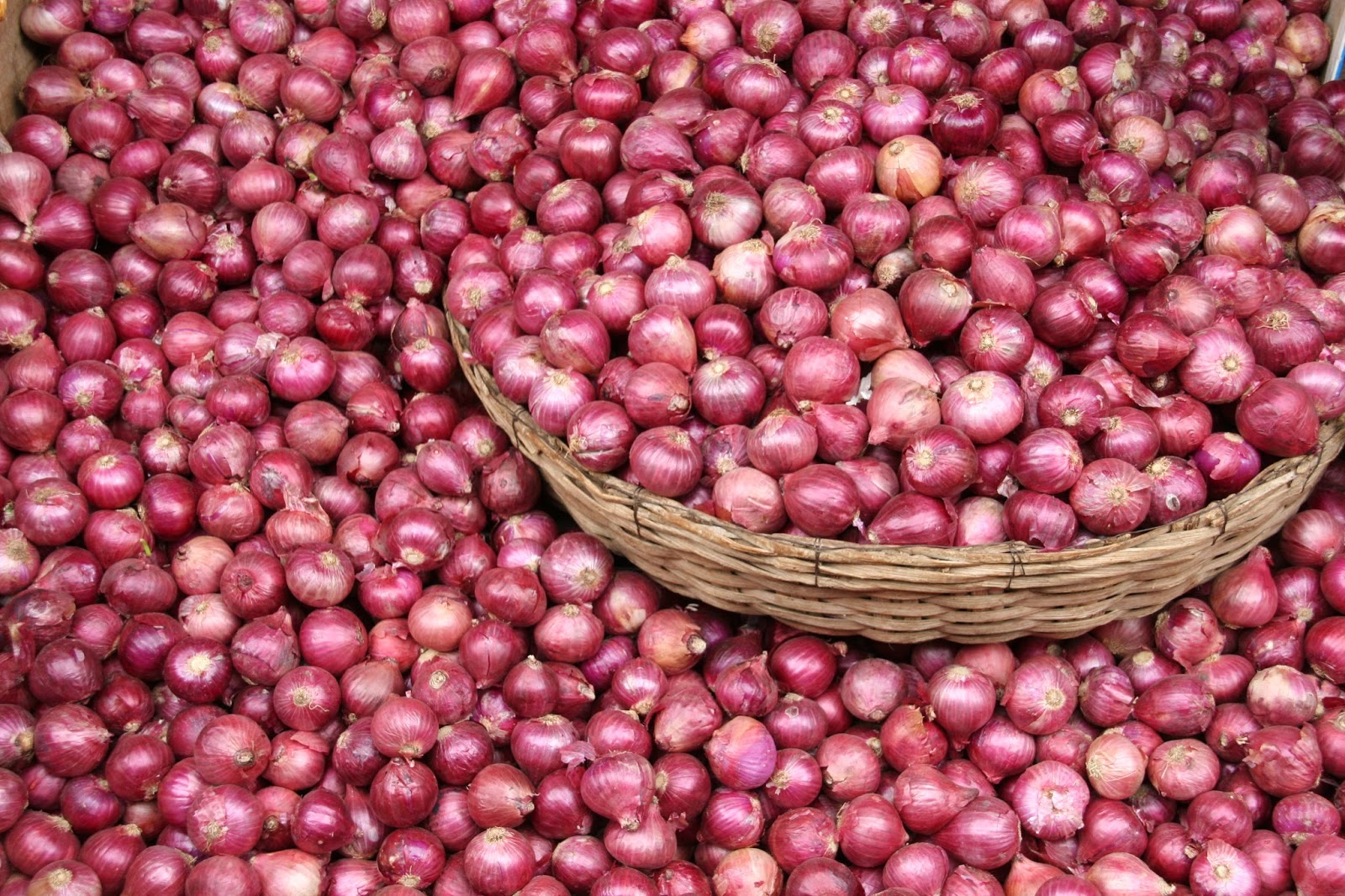
Onions farming in Nigeria is highly neglected and is considered to be a menial job meant only for the poor Northerners and yet this crop support millions of lives in Nigeria and the world over! In fact there are many families in the Northern part of Nigeria that depend on Onions farming and are living the life of their choice without other people knowing of it.
Onions farming has the capability of making millions for anyone who knows the market value of the crop and is serious with it as business either farming or even doing the buying and selling aspect alone.
Onions farming is not difficult as it can be grown within the compound if one wish because it can as well survive as against what many believe that it can only be planted and harvested only in the Northern part of Nigeria. Onions can be grown anywhere in this country.
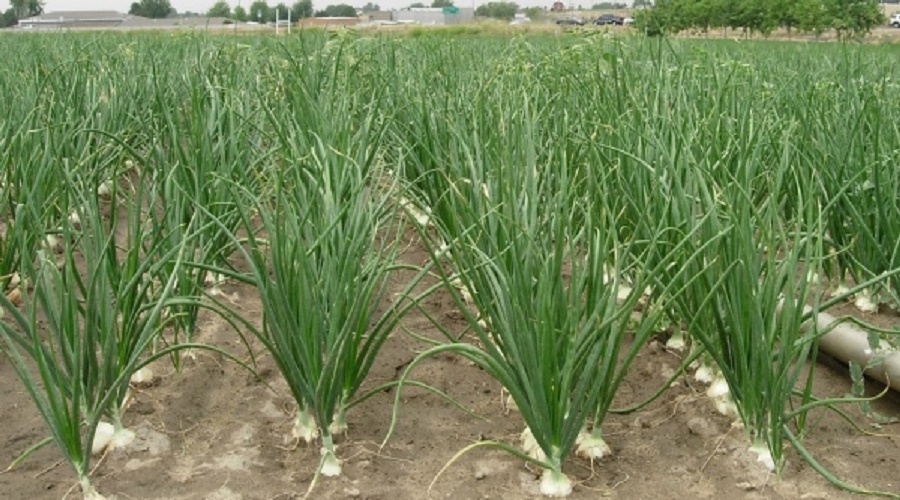 For those considering Onions farming, it is indeed a huge business with good turnover for serious farmers because it is highly consumed around the world. The business potentials in the business is great but just that most of us see onion as one of those food ingredients we cook with, but it goes beyond that if we really understand that millions of naira could be made by going into the business of onion farming.
For those interested in this great business of onion farming, we will be glad to provide you with some detailed guides on how to go into the business and make real money from it.
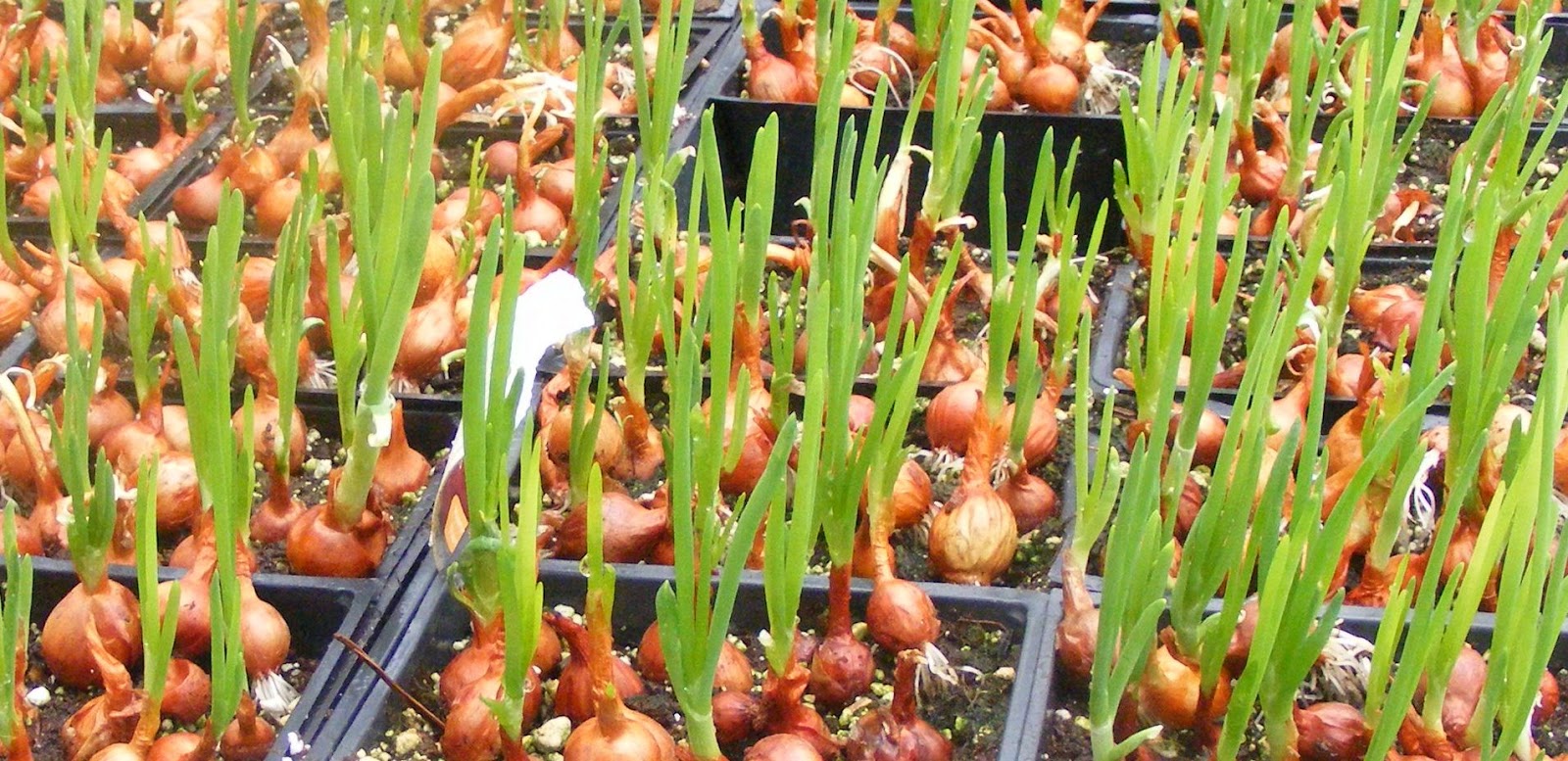 While weeding, enough cares should be taken not to disturb the roots needlessly. It is also good to employ natural root builder by adding some mycorrizal fungi to assist the roots get the soil nutrients.
For the green onions, that is usually due for harvesting when it gets to 5 inches tall as it has been discovered to have more stronger flavor if it,s allowed to grow taller.
It is usually best to plant onions by the mid-October, though it can be planted at other times but just that it needs uniform nutrients and moisture through out the growing season. Furrow irrigation is encouraged for the plants to produce very well.
Onions farming is not for mediocre but is meant for those who want to make millions because it has the capacity to do just that. Go to various major markets in Nigeria and see that onions business is so huge as a bag of onions currently sell between N25,000, N30,000 and N45,000 as the case may be.
Festive periods in Nigeria boosters the prizes of onions and other fresh products like Tomato and Pepper which are also hot cakes in Nigerian market.
Onions farming has the capability of making millions for anyone who knows the market value of the crop and is serious with it as business either farming or even doing the buying and selling aspect alone.
Onions farming is not difficult as it can be grown within the compound if one wish because it can as well survive as against what many believe that it can only be planted and harvested only in the Northern part of Nigeria. Onions can be grown anywhere in this country.
Onion farm | Image: AsiaFarmig.com
For those interested in this great business of onion farming, we will be glad to provide you with some detailed guides on how to go into the business and make real money from it.
Starting Onions Farming Commercially
1.Types Of Onions
Know that there are two basic types or categories of Onions and they are, short day and long day onions with differing growing periods. So when making a selection of the onions to plant, be on the look out for the perennial onions and the bulb types because they produces faster and better than every other types.2. How To Plant Onions
For maximum production, Onions are to be grown from seeds and then be transplanted. One can still grow it in which ever way he chooses but the methods of transplanting enables the farmer to properly space the crops. The best space is usually 1/2 an inch apart and 3/8 inch deep. The rows is best put at 15 inches apart.3. Maintaining The Plants
Onions requires a lot of water at the early stage so if it’s not raining appropriately then be ready to have it watered frequently for good water retention. Weeding is very important also because it will help the crop to utilize the nutrients in the soil instead of sharing it with the weeds as Onions has been found to do much better undisturbed by the other grasses.
Onion Seedlings Ready for Plantation
5. Harvesting Period
Onion are usually harvested within three months, especially the bulb onions. Be on the look out for when the plants begins to yellow because that is the right time to harvest it. You can also induce the process by breaking the tops of the onions as that makes it ripen before bringing out flowering stalks. Do not wait until it starts producing flower stalks.For the green onions, that is usually due for harvesting when it gets to 5 inches tall as it has been discovered to have more stronger flavor if it,s allowed to grow taller.
It is usually best to plant onions by the mid-October, though it can be planted at other times but just that it needs uniform nutrients and moisture through out the growing season. Furrow irrigation is encouraged for the plants to produce very well.
Onions farming is not for mediocre but is meant for those who want to make millions because it has the capacity to do just that. Go to various major markets in Nigeria and see that onions business is so huge as a bag of onions currently sell between N25,000, N30,000 and N45,000 as the case may be.
Festive periods in Nigeria boosters the prizes of onions and other fresh products like Tomato and Pepper which are also hot cakes in Nigerian market.
Other Business Opportunity In Onion Farming
You can buy a bag of onions at the rate of N4,500 and N5,000 from the Northern states of the country like Kebbi, Kano, Abuja or from any other states that grow it and have it brought down to any place of your choice while you source for the ready markets locally as it is consumed everywhere in the country.
Subscribe to:
Posts (Atom)